





How many people live in San Carlos, Sonora? According to Mexico’s 2020 Population and Housing Census, San Carlos had 2,508 residents. The city of Guaymas had 117,253 residents, while Guaymas Municipality—of which San Carlos is a part—had 156,863.
But anyone who spends time in San Carlos knows those numbers don’t tell the whole story. Winter visitors, vacation homeowners, holiday crowds and short-term rental guests make the community considerably busier at certain times of year. And because official census figures count usual residents within defined geographic boundaries, they should not be mistaken for the total number of people present on a busy winter day or holiday weekend.
Here’s what official census figures, local planning documents and research tell us about the population of San Carlos and Guaymas—and why the distinctions matter.
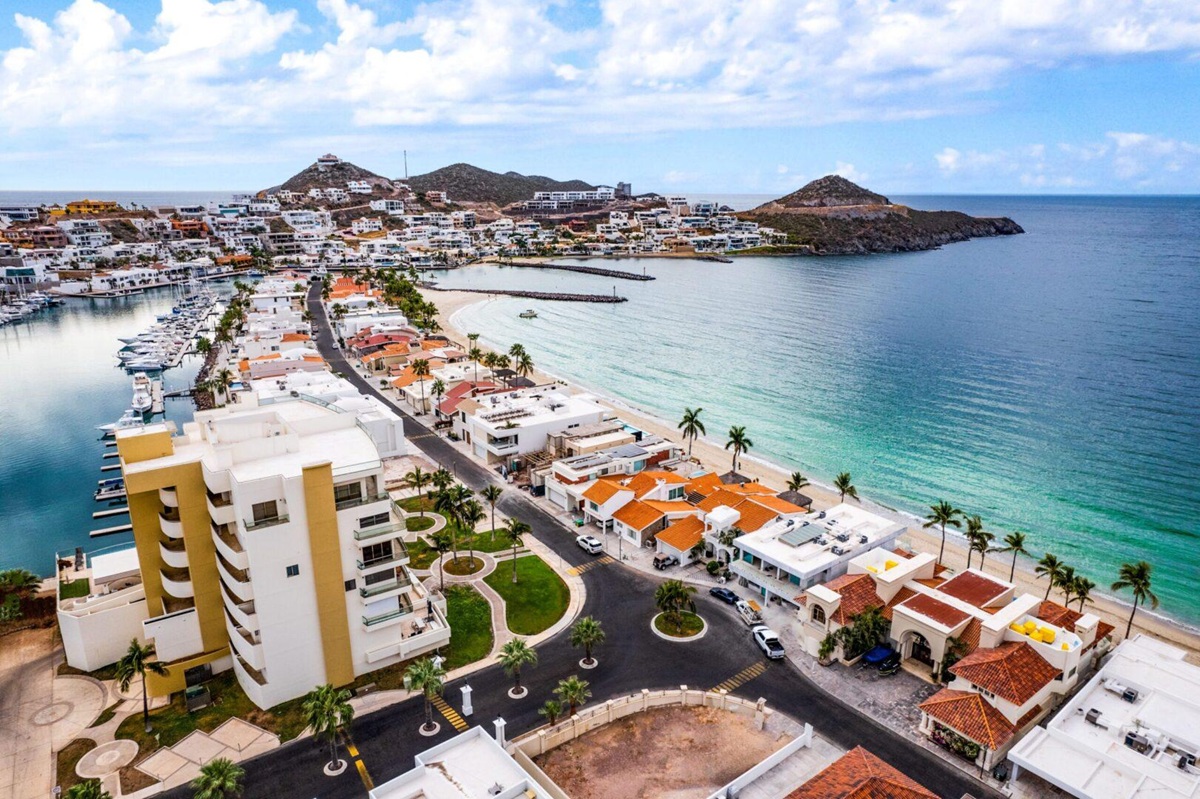
Aerial view of residential neighborhoods and coastline in San Carlos, Sonora, Mexico. Source Seascape Real Estate
San Carlos and Guaymas Population: 2020 Census
| Location | 2020 population |
|---|---|
| San Carlos (San Carlos Nuevo Guaymas) | 2,508 |
| Heroica Guaymas (city) | 117,253 |
| Guaymas Municipality | 156,863 |
What’s the difference between Guaymas city and Guaymas Municipality? Heroica Guaymas is the city and municipal seat. Guaymas Municipality is the larger administrative area that includes Heroica Guaymas, San Carlos and numerous other communities, including Vícam and Pótam. San Carlos is a locality within that municipality; it is not a separate municipality. Neighboring Empalme is a different municipality.
That means San Carlos’s 2,508 residents are already included in the municipality’s total of 156,863. It is also important to note that INEGI’s figure for San Carlos refers to the specifically defined locality named San Carlos (San Carlos Nuevo Guaymas). What people refer to informally as the greater San Carlos area may not match those census boundaries exactly.
How Has the Population of San Carlos Changed?
San Carlos’s officially counted resident population more than doubled between 1990 and 2020, although growth was much slower during the most recent census decade.
| Census year | San Carlos population |
|---|---|
| 1990 | 1,124 |
| 2000 | 1,440 |
| 2010 | 2,264 |
| 2020 | 2,508 |
Between 2010 and 2020, the number of usual residents increased by 244 people, or approximately 10.8%. Guaymas Municipality as a whole grew from 149,303 to 156,863 over the same period—about 5.1%.
These figures measure changes in the resident population. They do not measure all of the construction, tourism activity or seasonal occupation that took place during those years.
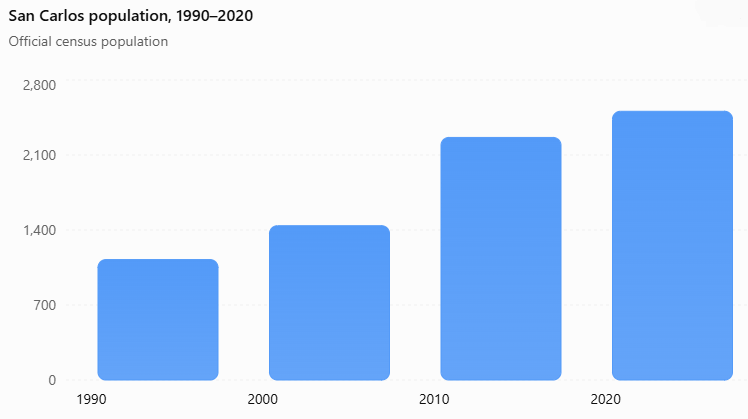
San Carlos Population Growth Chart 1990-2020
Why Does San Carlos Feel So Much Bigger Than 2,508 People?
The short answer is seasonal population. San Carlos has long attracted part-time residents from Canada and the United States, as well as Mexican vacation homeowners and visitors from elsewhere in Sonora and beyond.
The 2020 census had a reference date of March 15, 2020, but its population total was based on usual residence, not simply everyone physically present on that date. A foreign-born person who normally lives in San Carlos can be counted as a resident. Someone visiting for a few weeks or months whose usual home is elsewhere may not be. Nationality alone does not decide whether someone is included.
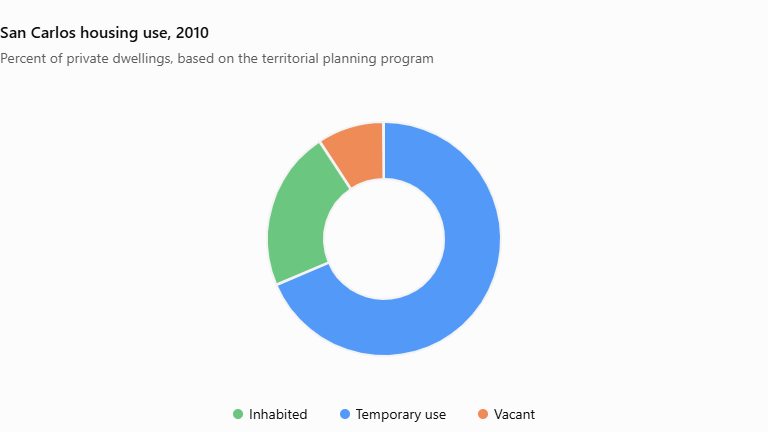
Most San Carlos homes were classified for temporary use in 2010
A territorial planning study for the Guaymas–Empalme–San Carlos urban area reported 3,471 private dwellings in San Carlos in 2010. Of these, 68.8% were classified as temporary-use dwellings, while only 22.07% were inhabited by usual residents. The study attributed the particularly high share of temporary-use properties to San Carlos’s role as a tourism destination.
That is a remarkable finding: nearly seven out of ten dwellings were classified for temporary use in 2010. It helps explain how a place with a relatively small census population can have a substantial built-up residential area.
An INEGI-based compilation of 2020 locality data subsequently reported 3,866 total dwellings in San Carlos, of which 1,004 were inhabited. However, these totals do not establish that every remaining dwelling was a second home or vacation rental. Temporary-use and vacant dwellings are different census categories, and the precise 2020 division between them has not been confirmed here.
Snowbirds and foreign retirees
San Carlos’s winter season is an important part of the picture. In June 2020, Mexico’s Centro de Investigación en Alimentación y Desarrollo (CIAD) described research into foreign retirees in San Carlos and Bahía de Kino. The researchers cited an estimated 3,500 to 7,000 foreigners living temporarily or permanently in San Carlos, principally linked to migration from the United States and Canada, with October through April identified as a common seasonal period.
That was a historical research estimate, not an official census count or a verified current winter population. It covered both temporary and permanent residents, and its geographic definition may differ from the census locality. It should therefore not be added to the 2,508 census figure to calculate San Carlos’s population.
Holiday visitors and vacation rentals
Seasonal changes aren’t limited to the winter months. Semana Santa, summer weekends and other holiday periods can bring large numbers of domestic visitors to San Carlos. These are visits over a period of time—not necessarily the number of people present simultaneously.
Short-term rentals have become another important part of the local accommodation market. In January 2026, the Guaymas–San Carlos Convention and Visitors Bureau president told Meganoticias that more than 2,000 houses and condominiums were being offered as vacation rentals in San Carlos, compared with roughly 500–600 some seven or eight years earlier. This was an industry representative’s estimate, not an independently audited count, and it should not be compared directly with the census locality housing figures.
Together, second homes, seasonal residents, hotels and vacation rentals help explain why the demand for restaurants, groceries, water, roads and other services can vary so much throughout the year.
San Carlos Has an Older Population Than Guaymas Overall
The 2020 census data also highlight a difference in the age profile of the two communities. An INEGI-based locality compilation reports that 596 of San Carlos’s 2,508 residents were aged 65 or older—approximately 23.8% of the population. For Guaymas Municipality as a whole, the corresponding share was approximately 8.7%.
In other words, the proportion of residents aged 65 and older in the census locality of San Carlos was more than twice the municipal average. This reflects San Carlos’s significance as a retirement destination, while also underscoring why access to healthcare, transportation and day-to-day services matters to the community.
Those figures describe usual residents counted in the 2020 census, not all part-time retirees and winter visitors.
Population Growth and Urban Development Are Not the Same Thing
San Carlos may appear to be developing much faster than its official population numbers suggest. The distinction becomes clearer in Guaymas’s Municipal Urban Development Program, dated September 2024.
The program examines growth in the built-up areas of Guaymas and surrounding localities and identifies a gap between urban expansion and population growth. It also raises concerns about the pace of real-estate development and the capacity of infrastructure and services to keep up.
For San Carlos, this matters because a new home or condominium does not necessarily create a new full-time census resident. It might be occupied only during the winter, used for family holidays, placed in the vacation-rental market or remain unoccupied for part of the year. Yet all these properties can affect infrastructure needs, particularly during peak periods.
Population statistics are therefore only one part of understanding how San Carlos is changing. Housing use, visitor demand and development patterns provide essential additional context.
Is There Newer Population Data Than the 2020 Census?
Yes for Guaymas Municipality, but not a new standalone census count for San Carlos. INEGI released results from its 2025 Intercensal Survey in September 2026. The survey provides more recent population estimates at the municipal level and for individual localities with at least 50,000 people.
San Carlos does not meet that locality-size threshold, so the 2,508 figure from the 2020 census remains the latest full-census population count for the San Carlos locality. The 2025 survey can be used to examine more recent trends for Guaymas Municipality, with the important distinction that survey estimates and full census totals are not identical measures.
Frequently Asked Questions
What is the population of San Carlos, Mexico?
INEGI counted 2,508 usual residents in the locality of San Carlos (San Carlos Nuevo Guaymas) in the 2020 census. That is not an estimate of the number of people staying in the area during peak tourism season.
How many people live in Guaymas, Sonora?
In 2020, 117,253 people lived in the city of Heroica Guaymas, while 156,863 lived in the larger Guaymas Municipality, which includes San Carlos and other communities.
Is San Carlos part of Guaymas?
Yes. San Carlos is within Guaymas Municipality. It is not a separate municipality, and its census population is included in the municipal total.
How many people live in San Carlos during the winter?
There is no verified, current count of everyone present in San Carlos during the winter season. Research has documented a substantial foreign seasonal community, but historical estimates cannot be treated as a current headcount or simply added to census resident totals.
Sources and Further Reading
- INEGI — 2020 Population and Housing Census, Guaymas and San Carlos results.
- INEGI — 2020 Census and locality-level data.
- Guaymas Municipal Urban Development Program (September 2024) — population history and development analysis.
- Territorial planning figures reproduced in a San Carlos environmental-impact filing — includes the 2010 temporary-use housing statistics.
- INEGI-based locality data compilation — San Carlos demographics and housing, 2020.
- CIAD — Research on foreign retirees in San Carlos and Bahía de Kino (2020).
- Meganoticias — San Carlos vacation-rental estimates (January 2026).
- INEGI — 2025 Intercensal Survey.
Data note: Unless otherwise stated, population and demographic figures refer to the 2020 census and the specific geographic units identified. Tourism estimates, residential housing measures and seasonal-resident estimates represent different concepts and should not be combined into one population total.